home as belonging
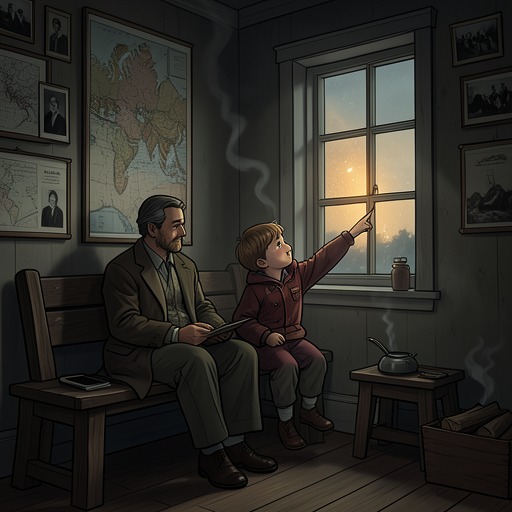
The Ballad of the Last DragonHome as belonging is a central concept in the book’s treatment of displacement, grief, love, and chosen family. It begins as Sylvaine Abelan’s ache for a place where she is not merely tolerated or maintained, and ends as a reciprocal condition created by love: a home is made of people who understand one another, stand watch for one another, and remain together even when the world offers no secure ground. The concept therefore transforms home from a possession into a relationship, and from a refuge passively received into a commitment actively extended to others.
From Loss to the Desire for Home
Sylvaine’s understanding of home is shaped by catastrophic loss. She recalls having her home, family, and faith in her own value taken away, then clawing her way back through survival and artistic work. Storytelling and song give her a calling and a way to make people listen, but public attention cannot cure the deeper absence. Fame, glory, and safety once seemed to promise freedom from hunger, homelessness, and the fear of being judged as lesser; beneath those ambitions, however, lay the more fundamental wish for somewhere to belong.
That wish is sharply distinguished from charity. Sylvaine does not want Kingsley and Brigitta merely to shoulder the burden of feeding her as though she were a stray cat. Her repeated desire for home is a demand for mutual recognition: she wants people who understand her, not simply people who provide for her. The distinction gives the concept an ethical force. A roof or a meal may preserve life, but belonging requires that a person be regarded as part of a shared life rather than as an obligation carried by someone else.
Home Beyond Buildings and Roots
The contrast between fixed shelter and relational belonging becomes explicit when Sylvaine watches Neith and Cadoc’s easy banter. Their good-natured ribbing and long familiarity reveal a closeness that does not depend on remaining in one place. Sylvaine observes that people without roots struggle to grow anything capable of withstanding a storm, yet Neith and Cadoc possess roots in one another even while they travel. Their example revises the ordinary image of home: it need not be measured in bricks, stones, timber, or books in a library. It can be the people loved and returned to.
This insight is not sentimental or naïve. Sylvaine immediately recognizes that people can be taken away as easily as physical possessions. Aeron Fowler’s death makes the danger concrete. She realizes only afterward how much Aeron meant to her, not merely as a useful companion but as a friend who understood her. Neith and Cadoc may blame Sylvaine for Aeron’s loss, yet they had looked out for her and watched her back when turning away would have been easier. The resulting sense of home includes protection, guilt, grief, and imperfect loyalty; belonging does not eliminate vulnerability, because loving people also gives the world something it can take.
Recognition Between Sylvaine and Jaromir
Sylvaine’s bond with Jaromir brings the concept into its most intimate form. Jaromir’s handmade gift, created from memories of watching her play, embodies a kind of attention that words alone could not provide. His awkward rambling and reddening cheeks show that he has been observing and remembering her artistic life; the object becomes material proof that she has been seen. Sylvaine experiences the gift as both joy and pain because she loves him deeply while believing that another life might have allowed them to be home for each other.
Their eventual confession changes that possibility into an explicit mutual claim. When Jaromir asks whether she would still have him after he has broken her faith, Sylvaine answers that her thoughts are always of him and that she wants to remain at his side as his partner in all things. She imagines waking beside him, enduring his scowling and grunting, finding the practical wooden carvings he makes for her, writing songs that make him laugh, and learning the world with him. These ordinary details matter because they define belonging not as a single declaration but as a future composed of repeated daily acts.
Sylvaine then recalls that Jaromir once asked where home was and that she had promised to tell him when she found it. Her answer is direct: Jaromir is her home. Jaromir reciprocates by saying that he has always loved her and that she will always be his home. The exchange completes the concept’s movement from private longing to shared knowledge. Home is not merely where Sylvaine finally feels safe; it is where both partners recognize one another as the place of return.
A Chosen Future and an Open Door
The relationship’s conclusion broadens home beyond the couple. When Sylvaine asks Jaromir what he will do next, he promises to follow her anywhere: she may point to any place on the map, and he will go, provided they are together. He likewise defines his own home through companionship rather than geography. Their future is consequently mobile without being rootless. Movement no longer signifies exile, because the pair carries belonging with them.
Sylvaine’s final realization joins private happiness to public purpose. She understands that she has made an impossible dream real and that, although work remains and many others still need help, she can imagine no greater purpose than offering her services to anyone seeking refuge, with Jaromir beside her. The home she has found is therefore not a closed enclosure that excludes the displaced. It becomes a model of hospitality: having once lacked a place of her own, Sylvaine is prepared to help create refuge for others.
Narrative and Thematic Significance
Home as belonging gathers several of the book’s largest contrasts into one image. Against inheritance, status, property, and physical rootedness, it places chosen loyalty. Against the fantasy of fame and untouchability, it places trust and a lasting life. Against the fear that loss makes attachment impossible, it offers a more difficult answer: people may be taken away, but love can still make a life meaningful and can teach survivors how to protect others.
The concept also gives emotional shape to Sylvaine’s arc. She begins with no secure home and with the belief that artistic achievement might compensate for exclusion. She later recognizes that even a successful calling leaves an ache when it is not joined to understanding and reciprocal care. By the end, she does not abandon stories or songs; instead, she places them within a wider life of partnership, refuge, and service. Her artistic identity and her belonging no longer compete. Both become ways of making a place in the world.
The final image is deliberately dynamic rather than architectural. Sylvaine is home with Jaromir, yet the pair still has destinations to choose and people to help. The book’s answer is thus neither permanent settlement nor the denial of loss. Home is a living relation that can travel, endure grief, welcome the vulnerable, and turn a once-impossible wish into a shared practice.